Image of Sea Change Talent Partners logo with words "Sea Change".

Sea ChangeTalent PartnersTalent. Advisory. Partnership.

Elevating Talent Across Industries

Sea Change Talent Partners is a woman-owned talent venture firm specializing in helping companies—from Seed stage startups to global Enterprise organizations—build world-class teams. We recruit essential leaders and technical builders across key growth sectors, including software, hardware, energy, infrastructure, industrial innovation, mobility, and supply chain, enabling organizations to scale with precision, speed, and long-term vision. As early adopters in the energy transition, we apply that same forward-looking lens across energy, infrastructure, resources, and resilience at scale. Our team remains intentionally industry agnostic, tracking emerging technologies, shifting regulatory landscapes, and evolving leadership archetypes across multiple high-impact sectors to ensure clients gain real-world hiring insight and access to future-ready executive talent.

What We DoFull-Stack Recruiting and Strategic Talent Advisory

Sea Change Talent Partners offers comprehensive, end-to-end talent solutions, combining Full Stack Executive Recruiting with deep Talent Advisory and Market Intelligence.

Full Stack Recruiting

We manage the entire search process across all critical organizational functions:

  • Delivery and Operations: Ensuring efficiency and execution excellence.
  • Commercial and Go-To-Market: Driving revenue and market penetration.
  • Technical and Engineering: Securing specialized product and development talent.
  • Strategic and Executive Leadership: Placing leaders from high-impact individual contributors up to C-suite and Board-level placements.

Talent Advisory and Market Intelligence

Beyond search, we provide strategic counsel to optimize your hiring efforts and internal structure:

  • Organizational Design and workforce planning.
  • Compensation Benchmarking and leveling for competitive offers.
  • Interview Process Architecture and enhanced candidate experience design.
  • Market Mapping and Talent Intelligence, including compensation trends, competitive hiring signals, and real-time candidate availability.

Where We Work

Sea Change Talent Partners partners with both high-growth companies and established enterprises, focusing on building the executive teams that are actively shaping the future of essential industries. Our core sectors include:

Technology and Enterprise Software

Specialists in SaaS, data platforms, and cloud infrastructure.

AI and Intelligent Systems

Recruiting leaders in applied machine learning, data infrastructure, automation, and embedded AI.

Energy and Resources

Deep experience across renewables, storage, low-carbon fuels, nuclear, hydrogen, distributed energy, and grid modernization.

Infrastructure and Built Environment

Focused on utilities, critical infrastructure, smart grids, industrial facilities, and resilience planning.

Industrial Innovation and Manufacturing

Securing talent in advanced manufacturing, materials science, robotics, automation, and next-generation production systems.

Supply Chain and Logistics

Digital supply networks, procurement, operations, predictive analytics, and logistics platforms.

Mobility and Automotive

Leaders in EVs, automotive manufacturing, connected vehicles, fleet technology, and autonomous or shared mobility.

We are proud to support a diverse client base, including venture-backed startups, private equity and venture portfolio companies, and enterprise organizations committed to modernizing legacy systems or building the world’s next generation of essential technologies.

WhySea Change Talent Partners

Full Stack Coverage

One dedicated partner for every function and level, from high-impact individual contributors to C-suite and Board placements.

Technical & Operational Depth

Expertise across software, hardware, energy, industrial technology, manufacturing, and infrastructure ensures informed candidate assessment.


Investor Connected

Strong relationships with LPs, GPs, founders, and operators help align executive talent with critical capital strategy and accelerated growth plans.


Delivery-First Execution

Transparent pipelines, fast iteration cycles, and an excellent candidate experience that effectively reflects and protects your brand.


Inclusive & Diverse Hiring

We are committed to building executive teams that reflect real markets and are proven to drive superior long-term organizational performance.


Modern Recruiting Stack

Data-driven sourcing, advanced assessment, comprehensive pipeline visibility, and analytics built for maximizing both hiring speed and quality.


Who We Are

The Sea Change Talent Partners team offers more than 20 years of industry experience in specialized executive search, professional search, and strategic talent advisory services. We have expertise across high-impact sectors, including technology, energy, industrial, and infrastructure. We are trusted by leading innovators to execute niche, complex, and mission-critical searches across diverse industries and geographies. Our commitment is straightforward: to help the world’s most innovative companies scale faster, smarter, and with the precise executive talent needed to achieve their long-term vision.

Years of Professional Experience

companies

Let's talk talentConnect with Sea Change Talent Partners

If your organization is building for the future in critical sectors like software, infrastructure, clean energy, manufacturing, or mobility, Sea Change Talent Partners is ready to partner with you. We connect you directly to the exceptional executive leaders and technical builders who make innovation and scale possible.

I am a Candidate Exploring Opportunities

“Every candidate Sea Change presented came with comprehensive, thoughtful documentation – context, motivation, compensation, and cultural fit clearly laid out. It made decision-making faster and far more informed.”

Taylor Sipple

Director, Product Data Science, and Operations, The Demex Group

“Sea Change is a true business partner who intimately understands our industry and stage of growth, helping us hire talent with the right grit and risk profile for our organization. The experience is far from transactional, it’s transformational.”

Dan Forman

CEO, Copper Labs

News + Insights

Image of a blue LA Metro electric bus charges under an overhead high-power charging station near a power substation, with the Los Angeles skyline visible in the background.

California’s Largest Electrification Stress Test: The 2028 Olympics Legacy

When Los Angeles was awarded the 2028 Olympic Games, the original vision was incredibly ambitious. The city committed to hosting a largely car-free event, aiming to demonstrate how one of the most car-dependent metropolitan areas in the United States could leverage public transit to move millions of global visitors.

Today, that vision has evolved into a highly practical, transit-first strategy. It centers around strategic rail expansion, airport connectivity, localized mobility hubs, and the rapid electrification of public transportation networks.

What is frequently overlooked is that the upcoming Games are no longer just a logistical transportation milestone. They have actively transformed into a massive, unprecedented energy challenge that will test the regional power grid.

The Scaled Fleet Electrification Challenge

While multi-billion-dollar rail expansions naturally capture major media attention, one of the most substantial capital overhauls is quietly occurring within the Los Angeles Metro bus network. LA Metro has committed to a sweeping zero emission fleet transition, actively retrofitting and electrifying massive bus depots across the region ahead of the 2028 deadline.

Battery-electric buses are being deployed on active routes today, while high-power charging networks are expanding to support long-term fleet growth. The absolute scale of this logistical push is staggering. Metro estimates it may require approximately 2,700 additional buses during the peak of the Olympics to safely transport spectators between distributed venues, effectively doubling portions of its existing operational capacity.

While standard industry conversations focus primarily on purchasing zero-emission vehicles, the far more significant question centers on what occurs behind the scenes at the depot level.

Why Fleet Overhauls Demand Grid Modernization Infrastructure

Transitioning a metropolitan transit system away from diesel cannot happen in isolation. Replacing fossil fuels with commercial battery systems requires an absolute restructuring of the underlying utility environment, amplifying the localized need for robust grid modernization infrastructure.

Every electric transit vehicle requires specialized, high-capacity charging networks. In turn, every high-voltage charging station depends on a reliable source of continuous power, requiring each depot to possess sufficient grid capacity to support simultaneous charging across hundreds of buses.

As complex transit networks modernize, massive energy demands shift directly from traditional fuel distribution networks onto localized electrical infrastructure. This shifting paradigm creates a cascading set of strict technical requirements:

  • Substantial increases in peak localized grid capacity.
  • The deployment of new high-voltage transmission and distribution infrastructure.
  • Extensive substation upgrades and utility transformer installations.
  • Large-scale commercial energy storage deployment.
  • The integration of intelligent, automated smart charging systems.
  • Advanced load management technologies to mitigate peak grid stress.

When these capital-intensive needs are compressed into a fixed, immovable timeline leading up to a global event, the engineering complexity multiplies.

The Broader Questions Facing California’s Energy Goals

The realities of public transit electrification do not exist in a vacuum. At the exact same time Los Angeles is rushing to build out its zero-emission transit infrastructure, the state of California is simultaneously navigating several competing macroeconomic power demands:

  • Exponential power demand growth driven by rapid data center construction.
  • The accelerating electrification of commercial and residential buildings.
  • Rising consumer electric vehicle adoption across the broader population.
  • Massive, multi-phase airport modernization projects.
  • Heavy industrial electrification initiatives across manufacturing corridors.
  • Surging power requirements to support artificial intelligence computing clusters.

Each of these concurrent trends places severe structural pressure on the regional grid. Collectively, they raise a fundamental question for utility executives and policymakers: Can physical capital deployment successfully keep pace with aggressive, statewide transportation electrification goals?

Shifting Focus From Clean Generation to Delivery Capacity

For over a decade, clean technology discussions focused almost exclusively on expanding renewable generation resources. The next phase of the energy transition, however, will focus intensely on physical delivery capacity.

The primary challenge is no longer merely generating clean electricity. The true battle lies in reliably delivering sufficient electricity to the exact right places at the exact right times. Utilities must support transportation systems, industrial facilities, and expanding populations concurrently without compromising grid stability.

This systemic pressure explains why strategic conversations regarding grid modernization, transmission line expansion, utility-scale battery storage, and firm generation resources have accelerated so rapidly across the West Coast. The 2028 Olympics did not create these grid vulnerabilities; they simply made them impossible for stakeholders to ignore.

Navigating the Critical Infrastructure Workforce Shortage

From a workforce perspective, the long-term implications of this transition are profound. Successfully delivering combined transportation and energy infrastructure at this velocity demands deep technical talent across an array of highly specialized disciplines.

As utilities and engineering firms race to meet these tight municipal project deadlines, the demand for qualified builders has triggered an intense wave of clean tech talent recruitment. The current market requires seasoned operators across several core functional domains:

  • Power Systems Engineering: Specialists skilled in high-voltage network modeling and transient stability analysis.
  • Transmission & Distribution: Engineers capable of designing resilient grid connections and optimizing physical lines.
  • Grid Modernization & Energy Storage: Professionals experienced in integrating utility-scale battery systems and distributed energy resources.
  • Utility Operations & Construction Management: Project executives qualified to lead massive capital infrastructure deployments under strict deadlines.

The intersection of zero-emission mobility and grid reliability is forging entirely new workforce demands. Because these cross-functional requirements stretch far beyond the weeks of the Olympic Games, forward-thinking organizations are scaling up their engineering pipelines today to prepare for a multi-decade transition.

The Permanent Legacy of the 2028 Games

The most impactful legacy of the 2028 Los Angeles Olympics will likely not be the athletic venues constructed, the medals awarded, or even the localized rail lines completed. Instead, it will be the permanent acceleration of an essential conversation regarding what it genuinely takes to electrify a modern, industrial economy at scale.

The electric buses wrapped in Olympic branding will be highly visible to the public. The street-level charging stations and new light rail cars will be equally apparent.

However, the hidden utility investments, the substation upgrades, the transmission expansions, the utility-scale battery deployments, and the highly skilled workforce powering them behind the scenes will remain largely invisible to the average spectator. Yet, these exact industrial investments are precisely what will matter most for regional resilience long after the closing ceremonies conclude.

Image of cooling towers of a power plant rise above a green landscape and a road under a partly cloudy sky, with steam venting into the air.

The Climate Industry Was Too Early to Dismiss Nuclear

The climate sector may have wasted a decade underinvesting in nuclear because it was culturally unpopular, while simultaneously overfunding software layers that could never solve baseload energy constraints alone. For years, nuclear sat outside the acceptable narrative of climate tech. Too expensive. Too political. Too slow. Too risky. Now, many of the same investors and operators who once...
Image of geometric web of glowing light nodes and connected lines overlayed over a cityscape at night.

The Next Disruption in Energy Is Already Starting

For the last decade, distributed energy resources (DERs) were positioned as one of the most important disruptors in the energy transition. And in many ways, they were. They challenged centralized models.They introduced flexibility at the edge.They forced the industry to rethink how energy could be generated, stored, and consumed. That disruption mattered. It still does. But we are now on the...
Image of a large renewable energy farm featuring rows of solar panels behind a chain-link fence, with numerous wind turbines stretching across a desert landscape toward distant mountains.

The Next Wave of Climate Tech Will Not Look Like Software

Over the last fifteen years, I have watched climate tech move through multiple cycles of optimism, overcorrection, and recalibration. Each wave brought new capital, new founders, and new narratives about what would scale fastest. For a long time, software was the answer. It was capital efficient, scalable, and aligned with venture expectations. That is no longer true in the same way. The next...
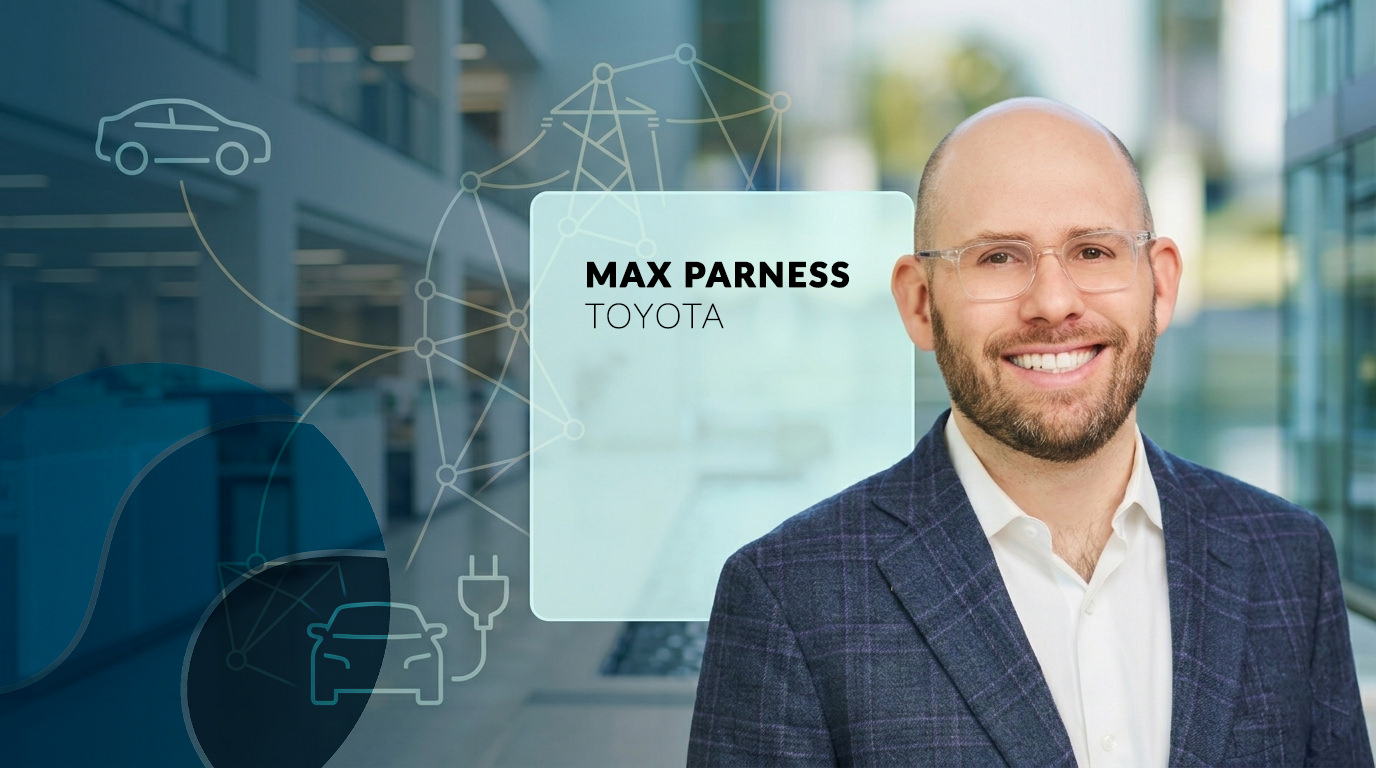
Image of Max Parness with "Toyota" written under his name and a abstract graphic of a connected vehicle network behind him.

The EV “Slowdown” Is Misread and the Grid Is Missing the Real Opportunity

The narrative around an EV slowdown is gaining traction. My view is that it is being misinterpreted.

Image of a an electric vehicle plugged into a charging cable with a glowing interface displaying charging status (80%) and graphics overlaid on the car's body.

EV Infrastructure, AI, and the Real Constraint in 2026 and 2027

The narrative around EVs right now is noisy. Depending on who you ask, the market is either collapsing or accelerating. The truth sits somewhere in between. EVs are not disappearing. But the market is going through a reset. From 2020 through 2024, growth was driven by incentives, capital availability, and aggressive OEM expansion. In 2025 and into 2026, we are seeing a correction. U.S. EV sales...
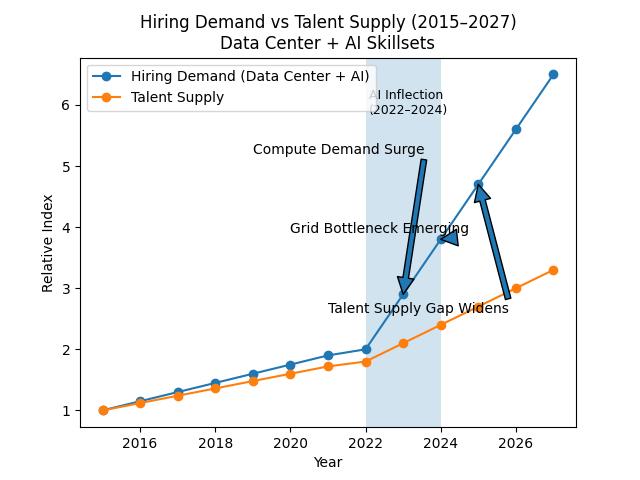
Image of a chart illustrates a rapidly widening talent supply gap from 2016 to 2026, as the hiring demand for Data Center and AI skillsets surges past the available talent supply—particularly following an AI inflection period between 2022 and 2024.

How Data Center Demand Is Creating a Talent Bottleneck and Driving Up Hiring Costs in Energy and Infrastructure

There is a growing gap between hiring demand, data center expertise, and the speed at which renewable and energy infrastructure needs to scale. We’re not just talking about scaling solar or wind anymore. The conversation has moved upstream to power, grid access, and infrastructure capacity itself. As highlighted in this Axios coverage on data center investment rivaling energy sectors, capital...
Image of a bar chart illustrating the short-term impact severity and long-term opportunity ratings across five climate tech infrastructure sectors, showing that long-term opportunities consistently match or exceed short-term challenges across all categories.

What’s the Skinny on Tariffs?

Tariffs can significantly affect climate tech infrastructure buildout—positively or negatively—depending on where they fall and how companies respond. Here’s a breakdown of the impact: Negative Impacts Increased Equipment Costs Tariffs on imported solar panels, batteries, inverters, or EV components (e.g., from China) can raise project costs by 10–30%, affecting solar, storage, and...
Image of a group of professionals collaborates at a wooden table covered in printed charts, graphs, and a laptop displaying financial analytics.

Sea Change Candidate Sentiment Report

The State of Climate Tech Candidate Risk Tolerance, Compensation Priorities, and New Opportunity Considerations Key Takeaways As climate technologies have become more mainstream, much of the recruiting industry has turned its attention to figuring out how to attract top talent into the climate market. While we recognize the value in these efforts, we believe startups need data-driven insights...
Image of a team looking at a document one of them is holding with smiles on their faces.

It’s Time to Stop Hiring Climate Tech Talent in the Dark

Anyone who’s ever made hiring decisions knows the real danger of hiring the wrong person. By some estimates, an unsuitable employee can cost a company as much as $240,000, not to mention the collateral damage inflicted on company morale and reduced productivity and achievement.

In a world where every decision impacts the bottom line and the meeting of key milestones to unlock further funding, the execution risk of hiring mistakes can be a death blow for a growing startup or new corporate division.