The United States power grid is entering one of the most significant transformation periods in its history.
Extreme weather events are increasing in frequency and severity. Electrification is accelerating across transportation and buildings. AI driven data centers are dramatically expanding energy demand. At the same time, aging infrastructure and retiring engineers are creating new operational risk.
Grid modernization is no longer a long-term initiative. It is an immediate national priority.
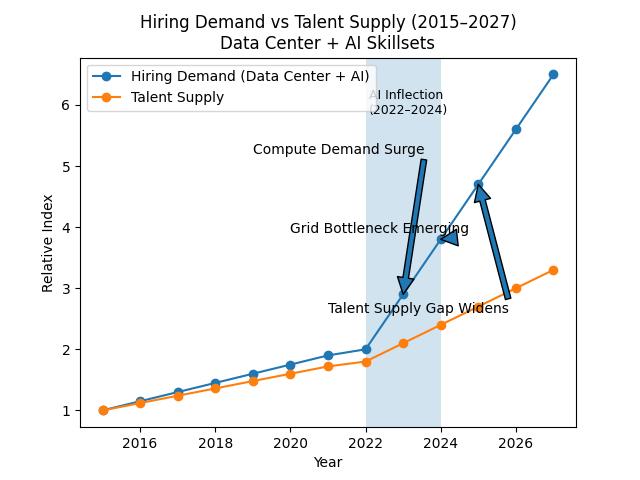
But while billions are being invested in infrastructure, transmission, and clean generation, one constraint is becoming increasingly clear. The limiting factor is not capital. It is talent.
The Grid Is Transforming at an Unprecedented Pace
The traditional electrical grid was designed for a different era. Power flowed in one direction from large, centralized power plants to consumers. Demand patterns were relatively predictable. Generation sources were concentrated and fossil fuel based.
Today, that model no longer holds.
Modern grid systems must support distributed energy resources such as rooftop solar, battery storage, and microgrids. Power now flows in multiple directions. Utilities must manage fluctuating renewable generation while balancing real time demand spikes from electric vehicles and industrial electrification.
Advanced software, digital monitoring systems, grid automation, and AI enabled forecasting are becoming core infrastructure components. Transmission expansion and resilience planning are critical in regions experiencing population growth and extreme climate stress.
This is not simply an infrastructure upgrade. It is a system redesign.
And system redesign requires specialized people.
The Hidden Constraint: Talent
Grid modernization is fundamentally a workforce challenge.
An Aging Workforce
A significant portion of the utility and power systems workforce is approaching retirement. Decades of institutional knowledge are leaving the sector at a time when complexity is increasing. Knowledge transfer gaps are widening.
New Technical Demands
Modern grid systems require expertise that did not exist at scale twenty years ago. Companies now need:
- Power systems engineers with distributed energy expertise
- Grid software architects and product leaders
- Data scientists and AI specialists
- Cybersecurity experts focused on critical infrastructure
- Transmission planning and regulatory strategy professionals
These profiles are highly specialized and scarce.
Competition for Talent
Grid modernization companies compete with climate technology startups, AI companies, electric vehicle manufacturers, and large technology firms for overlapping talent pools.
Software engineers who can build grid optimization tools can also build fintech platforms or AI applications. Data scientists capable of forecasting load and storage behavior are being recruited across industries.
Compensation expectations are shaped by these broader markets, not by traditional utility pay bands.
Slow Hiring Cycles
Many energy and infrastructure organizations still operate with slower hiring processes and outdated compensation calibration. In a competitive talent market, delayed decisions often result in lost candidates.
The result is a widening gap between strategic ambition and workforce capability.
What Needs to Happen for Grid Modernization to Succeed
If grid modernization is to power long term reliability, hiring strategy must evolve alongside infrastructure strategy.
1. Strategic Recruiting Investment
Hiring cannot remain reactive. Companies must proactively map critical roles across engineering, software, regulatory, and operations. Leadership hiring should occur early in transformation cycles, not after projects stall.
2. Compensation Calibration to Market Reality
Organizations must align compensation structures with the markets they are competing in. That includes understanding how equity, bonuses, and base salary expectations compare to climate technology and high growth sectors.
Underpricing roles in the name of historical norms creates long term delays and quality compromises.
3. Shortened Hiring Cycles
Speed is now a competitive advantage. Structured intake processes, defined evaluation criteria, and decisive offer timelines are essential. Delayed searches translate directly into delayed projects and revenue impact.
4. Cross Disciplinary Teams
The modern grid is not built by engineers alone. Successful teams blend infrastructure experience with product thinking, software development, regulatory insight, and commercial leadership.
The companies that modernize effectively are those that build integrated teams rather than siloed functions.
5. Leadership That Understands Both Infrastructure and Innovation
Grid modernization sits at the intersection of legacy systems and emerging technology. Leaders must navigate regulatory complexity while driving innovation. Identifying and attracting that hybrid leadership profile requires specialized search strategy.
How Sea Change Supports Grid Transformation
At Sea Change, we see talent as infrastructure.
The reliability and resilience of the modern grid will depend on the people designing, implementing, and scaling it.
We partner with grid modernization companies, climate technology firms, and infrastructure innovators to:
- Recruit critical engineering and technical specialists in competitive markets
- Hire product and software leaders who can translate infrastructure into intelligent systems
- Calibrate compensation to reflect current climate and technology market dynamics
- Build leadership teams capable of scaling through growth phases
- Shorten hiring cycles through structured, informed search strategy
We approach hiring not as a transactional process, but as a strategic lever in infrastructure transformation.
The stakes are high. Delayed hires slow projects. Misaligned compensation limits candidate quality. Fragmented teams create operational risk.
Reliable power depends on reliable teams.
Beyond Infrastructure: Talent as the Foundation of Reliability
Modernizing the grid is one of the defining challenges of the coming decade. It demands capital, technology, policy alignment, and long-term planning.
But none of it moves forward without the right people.
The grid will not modernize on investment alone. It will modernize through the engineers, operators, technologists, and leaders building it every day.
Powering reliability requires powering the workforce behind it.