The EV “Slowdown” Is Misread and the Grid Is Missing the Real Opportunity

The narrative around an EV slowdown is gaining traction. My view is that it is being misinterpreted.

What we are seeing is not a failure of electrification. It is a correction in how and when the market scales. Demand that was pulled forward by policy is now normalizing. That is not a sign of weakness. It is what real markets do.

At the same time, the fundamentals continue to strengthen. Battery costs are declining. Charging infrastructure is expanding. Vehicle quality and range continue to improve. These are the signals that matter.

The bigger issue is not adoption. It is execution.

Over the past 15 years working across the energy and climate sector, I have seen this pattern repeatedly. The industry tends to over-index on future-state solutions while underutilizing what is already deployable today.

That dynamic is playing out clearly in how EVs are being integrated into the grid.

I recently conducted a Q&A with Max Parness, Director of Grid Services at Toyota North America. The perspectives shared are his own and do not represent his employer. Our conversation reinforced a key point. EVs are already one of the most scalable distributed energy resources available. The industry is not treating them that way.


Kelly: My perspective is that EV adoption was pulled forward artificially by policy and is now normalizing. Are we truly seeing a slowdown, or just a correction?

Max: I think the tens of billions of dollars in write-downs are a clear signal that OEMs got ahead of customer demand. Adoption was driven more by policy than by customers. When those policies were reduced, demand softened. That looks like a correction, not a failure. At the same time, battery costs continue to decline and charging networks are expanding. The long-term trend remains intact.


Kelly: The industry seems to be over-indexing on long-term solutions like vehicle-to-grid. Why are we not scaling managed charging today when the technology already exists?

Max: From my perspective, managed charging is the most immediate opportunity. Millions of EVs can already adjust when they charge. If those vehicles are coordinated with grid needs, it can improve utilization, lower costs for customers, integrate more renewable electricity, and reduce strain on aging infrastructure. This can be done today with existing software and assets already on the road.

Yet adoption remains limited.


Kelly: One of the biggest challenges I’m seeing is that enrollment, not technology, is the real bottleneck. What does it really take to get customers to participate at scale?

Max: What stands out to me is that customers need simplicity and trust. They want to understand the value quickly, enroll easily, and see consistent savings. Companies with strong consumer brands, such as automakers, can play a key role role by embedding these programs into platforms customers already use, which reduces friction and customer acquisition costs. Without scale, the economics do not work. With scale, the benefits extend to the entire grid.


Kelly: From what I’m seeing, EVs are already the largest distributed energy resource we have. Why is the grid not treating them that way?

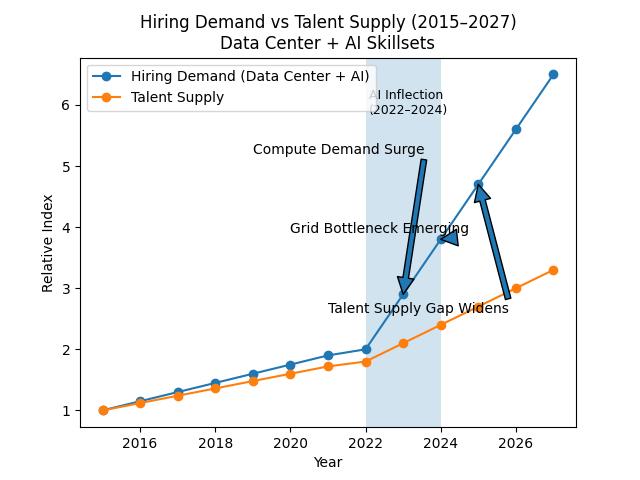
Max: My sense is that the opportunity is there, but the industry is still organized in silos. Electricity, mobility, and infrastructure are converging, but the talent and systems supporting them are not yet aligned. The next phase depends on people and organizations that can operate across those boundaries.

The opportunity is not theoretical – it exists today. The challenge is execution.

The companies that get this right will not be the ones with the most advanced technology. They will be the ones that can execute at scale.

Kelly: That shift will not be driven by new infrastructure alone. It will be driven by teams that can operate across electricity, mobility, and data, and turn what already exists into something that works in practice.

#EnergyTransition #Electrification #EVs #Grid #ClimateTech #DistributedEnergy #VPP #ManagedCharging #ACTexpo