For the last decade, distributed energy resources (DERs) were positioned as one of the most important disruptors in the energy transition. And in many ways, they were.
They challenged centralized models.
They introduced flexibility at the edge.
They forced the industry to rethink how energy could be generated, stored, and consumed.
That disruption mattered. It still does.
But we are now on the cusp of another shift, one that is going to redefine not just where value is created, but how quickly the system itself can evolve.
DERs Changed the Edge. They Did Not Rebuild the Core
Distributed energy resources have been incredibly effective at improving how the system operates at the margins.
They:
- smooth demand
- improve local resilience
- optimize consumption patterns
What they were never designed to do is:
- replace large-scale generation
- solve transmission bottlenecks
- support step-function demand growth
And that is exactly what the system is now being asked to do.
The System Problem Has Changed
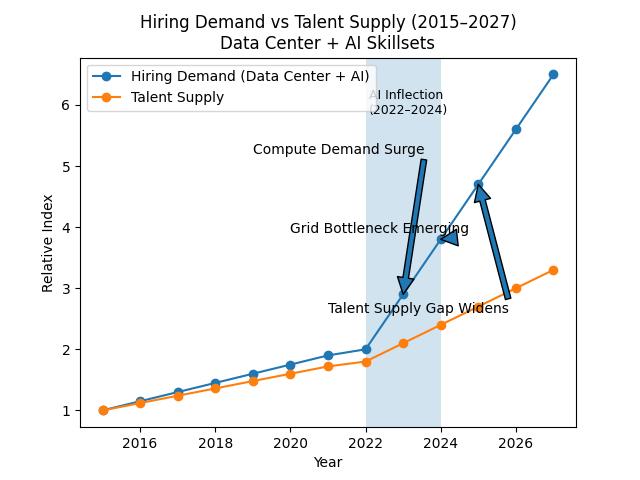
Energy demand is no longer growing incrementally. AI infrastructure, electrification, and industrial load are reshaping the curve entirely. What was once a planning problem is now a capacity problem. We are no longer asking: “How do we optimize the grid?” We are asking: “How do we build enough energy, fast enough, to support what is coming next?” That is a fundamentally different challenge.
Speed Is Becoming the Constraint
The most important shift underway is not just technological. It is operational. Critical processes like interconnection, grid planning, and project deployment still operate on timelines measured in months, often longer. That no longer aligns with the pace of demand.
AI-driven platforms and infrastructure-focused companies are beginning to challenge this directly, compressing what used to take 6–12 months into minutes or days through:
- automated planning
- real-time simulation
- software-enabled interconnection modeling
- accelerated permitting workflows
This is where real disruption is beginning to take shape. Not just in generation. But in implementation.
Where the New Disruptors Are Emerging
The companies defining this phase will not look like the last generation. They will not sit purely at the edge of the system. They will operate across:
- generation
- infrastructure
- software
- systems integration
And increasingly, they will compete on speed. These companies will:
- build new capacity, not just optimize existing supply
- compress timelines across planning and deployment
- integrate distributed and centralized systems
- navigate complex regulatory and infrastructure environments
This is a harder category to build in. But it is also where the next set of category-defining companies will emerge.
The Shift Already Underway
In conversations with founders and investors, there is a clear change in focus.
The questions are no longer centered on:
- how to aggregate DERs
- how to optimize distributed assets
They are shifting toward:
- how to secure reliable generation
- how to navigate interconnection and transmission constraints
- how to deploy infrastructure at speed
This is not a rejection of DERs. It is a recognition that the system requires more than optimization at the edges, and that speed is now a defining variable.
What Comes Next
The last decade was defined by decentralization. What comes next will be defined by rebuilding and acceleration.
Rebuilding:
- capacity
- infrastructure
- system resilience
Accelerating:
- planning
- interconnection
- deployment timelines
With distributed energy as a critical component, but not the entire solution.
The Real Shift
We are moving from optimizing the edges of the system to rebuilding the system itself. And from operating on traditional timelines to compressing what once took months into days.