Most of what gets written about the qualities of a good leader was built for a world that no longer exists. It assumes the leader sets direction, the team executes, and the main risk is people losing motivation somewhere in the middle. In deep tech and AI, that model breaks almost immediately. Direction changes when an experiment fails, the team knows more than the leader about the thing that matters most, and the biggest risk is spending eighteen months and a very large amount of capital building something that never reaches production.
So the real question for anyone hiring right now is narrower than it looks. It is not about what makes a good leader in general, but rather which traits of a good leader still hold up when the science is unfinished, the hardware is unproven, and your best engineers have three competing offers in their inbox.
Through executive search services, Sea Change places engineering and commercial leaders into AI, energy transition, infrastructure, and advanced manufacturing companies, and our team sits right in the middle of those searches. The pattern we see is consistent enough to be uncomfortable: companies keep hiring for generic leadership qualities, then wonder why the person cannot hold a room full of research scientists or explain to a board why the pilot has not shipped.
The data backs this up starkly:
RAND Corporation found that more than 80 percent of AI projects fail to deliver their intended value, roughly twice the failure rate of conventional IT projects.
MIT’s Project NANDA study of generative AI in business found that about 95 percent of organizations saw no measurable return to the income statement from their pilots.
S&P Global’s enterprise survey found that 42 percent of companies abandoned most of their AI initiatives that year, up from 17 percent the year before.
Those are not model failures. Models have never been better. They are leadership failures, and they show up in scoping, sequencing, prioritization, and the willingness to kill work that is not going anywhere.
Why the Qualities of a Good Leader Change in Deep Tech and AI
Three things make AI and advanced manufacturing practice leadership genuinely different from standard software or corporate technology leadership:
The science is not finished: In most companies, leaders manage execution risk. In deep tech, leaders manage execution risk sitting on top of technical risk that may never resolve. You can run a flawless process and still be wrong about the physics, requiring a high tolerance for being wrong in public.
Hardware is usually involved: BCG’s research on deep tech investing found that more than 80 percent of deep tech ventures build physical products, introducing unit economics and scale-up risks. A leader who has only shipped software will underestimate the gap between a prototype and a repeatable production line by years.
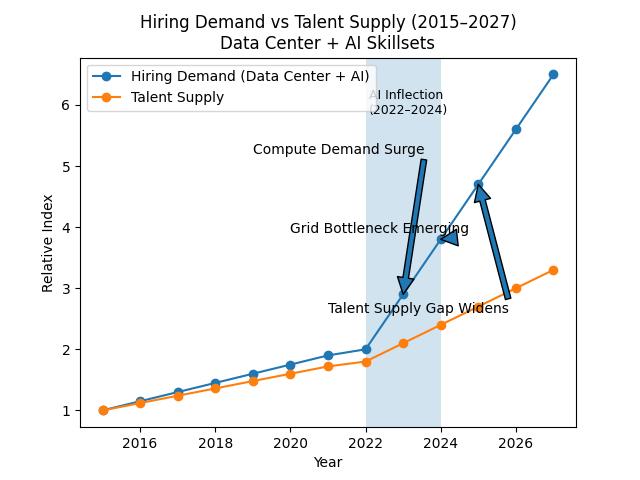
The talent market is unforgiving: According to Levels.fyi, AI wage premiums widen significantly at senior levels, moving from 6 percent at the entry-level to nearly 19 percent at the staff level. When top talent can leave on Friday and start elsewhere on Monday, leadership quality becomes a critical retention mechanism.
The Technical Competence Factor That Most Companies Underweight
There is a persistent belief in general management circles that a strong leader can lead anything. Research does not support this assumption, especially in technical environments. Artz, Goodall, and Oswald studied boss competence across large datasets and published their findings in the Industrial and Labor Relations Review. Their conclusion was definitive: a boss’s technical competence is the single strongest predictor of employee job satisfaction, ranking above charisma, communication style, and even pay among American workers.
That finding lands hard in AI and deep tech. Research scientists and platform engineers can tell within two meetings whether the person leading them understands the work. Once they decide the answer is no, you lose technical influence and start a retention clock you cannot see.
Effective technical leadership skills do not mean the leader must be the best coder in the building. It means they can ask the second question. While anyone can ask why a model underperformed, a fluent leader asks whether the evaluation set reflects production distribution, what the failure modes look like at the tail, and what it costs to close the gap. That second question defines true technical leadership.
Seven Traits of a Good Leader in Deep Tech and AI Environments
These are the specific qualities of a good leader that Sea Change screens for when our team runs a search in this space:
Technical fluency deep enough to interrogate, not just receive: They can read the work, challenge assumptions, and tell the difference between a hard problem and a badly framed one without needing to write the code.
Strategic vision anchored to a commercialization path: Vision is a defensible sequence of milestones unlocking customers, funding scale-up, and proving unit economics rather than a generic industry-transformation slide. Leaders who cannot draw that line burn capital on technically impressive work that no one buys.
Willingness to kill their own projects: The abandonment data is brutal, and most of it arrives too late.The strongest technical leaders Sea Change places have a track record of shutting down unviable work early and on purpose with the reasoning documented. That is a hiring signal, not a red flag.
Honest calibration on time horizons: A leader who rejects short-term vendor promises in favor of realistic multi-year timelines for meaningful returns.
Talent magnetism independent of budget: Compensation data compiled from SignalFire in 2026 showed one frontier lab retaining about 80 percent of its two-year hires while paying below the market leader at the median, and another retaining 64 percent while paying the most. Top-tier labs retain strong talent through challenging technical problems, leadership quality, and peer caliber rather than top-of-market pay alone.
Translation across four audiences: In a single week, a deep tech leader may need to speak to research staff, a manufacturing floor, a regulator or utility partner, and an investor. Each audience requires a different level of abstraction and a different definition of proof. Leaders who only have one register stall at the Series B.
Judgment under genuine uncertainty: They make calls with partial information, state assumptions clearly out loud, define what would change their mind, and revisit it without ego when the data comes back.
Leadership Qualities That Do Not Transfer: Red Flags When Hiring Deep Tech Leaders
Candidates who look exceptional on paper often fail in deep tech environments if they display specific red flags:
Describing technical outcomes entirely in the passive voice with no visible fingerprints on decisions.
Inability to name a failure in enough detail to prove personal proximity to the problem.
Speaking about engineers as a resource rather than people with names and specific strengths.
Scaling a team successfully but never scaling a technology.
Possessing deep research credibility with zero evidence of shipping anything customers paid for.
That last one is the most common trap in AI leadership hiring right now. Research prestige is frequently mistaken for leadership capability, but they are entirely distinct skill sets.
Interview Questions That Test for AI Leadership Qualities
To accurately assess candidates, hiring teams should replace generic leadership questions with these hiring process design tools:
Walk me through a technical decision you overruled, and what you understood that the team did not.
Tell me about a project you killed, when you knew, and how long the gap was between knowing and acting.
How did you explain a missed technical milestone to your board or your CEO?
Which of your engineers grew the most under you, and what specifically did you do?
What did your last technology cost per unit at first release, and where is it now?
The answers separate people quickly. Fluent leaders get specific and stay specific. Everyone else moves back up to abstraction within two sentences.
How Sea Change screens for these leadership qualities
Our search process is built around the assumption that pedigree tells you very little about whether someone can lead a deep tech or AI organization. We test for the traits of a good leader through evidence rather than self-report: reference conversations with the engineers who reported to the candidate, scorecards that name the specific technical judgment the role requires, and interview loops designed to surface how someone behaves when a program is failing rather than when it is going well.
That approach comes from working across AI, energy transition, infrastructure, and advanced manufacturing, where the same leadership qualities keep predicting who ships and who stalls.
Frequently Asked Questions About Deep Tech and AI Leadership
What are the most important qualities of a good leader in AI companies?
Technical fluency, strategic vision tied to a commercial path, comfort with uncertainty, and the ability to attract and retain scarce technical talent without relying solely on compensation.
What are the essential traits of a good leader in deep tech?
The ability to sequence a roadmap against unfinished science, honest calibration on time horizons, willingness to kill unviable work, and credibility with the engineers and scientists doing the work.
Do deep tech leaders need a technical background?
They need genuine technical fluency, which usually stems from a technical background but can be built by commercial leaders who spend years close to engineering. Research on boss competence confirms technical credibility is the single strongest driver of team satisfaction.
How is leading an AI team different from leading a software team?
AI outcomes are probabilistic, timelines are extended, the talent market is far more competitive, and a large share of projects will not reach production, requiring leadership built around uncertainty rather than delivery predictability.
What is the biggest mistake companies make when hiring deep tech leaders?
Hiring for pedigree instead of judgment. A strong research reputation or brand-name past employer is not evidence that someone can sequence a roadmap, hold a technical team, or tell the board the truth about a slipped milestone.
How do you assess leadership qualities during an executive search?
By evaluating concrete evidence—specific decisions, failures, and people developed—and verifying details through references who worked directly beneath the candidate rather than above them.
Conclusion
The traits of a good leader in deep tech and AI are standard qualities applied under conditions where science may fail, hardware definitely will not work the first time, and your team can leave tomorrow. Technical fluency serves as the entry ticket, strategic vision transforms capability into a company, and honesty regarding uncertainty keeps organizations funded long enough to succeed.If you are building or replacing a leadership layer in an AI or deep tech organization, the market rewards precision here more than almost any other hire you will make. That is the work Sea Change does every day, and we are always glad to talk it through.